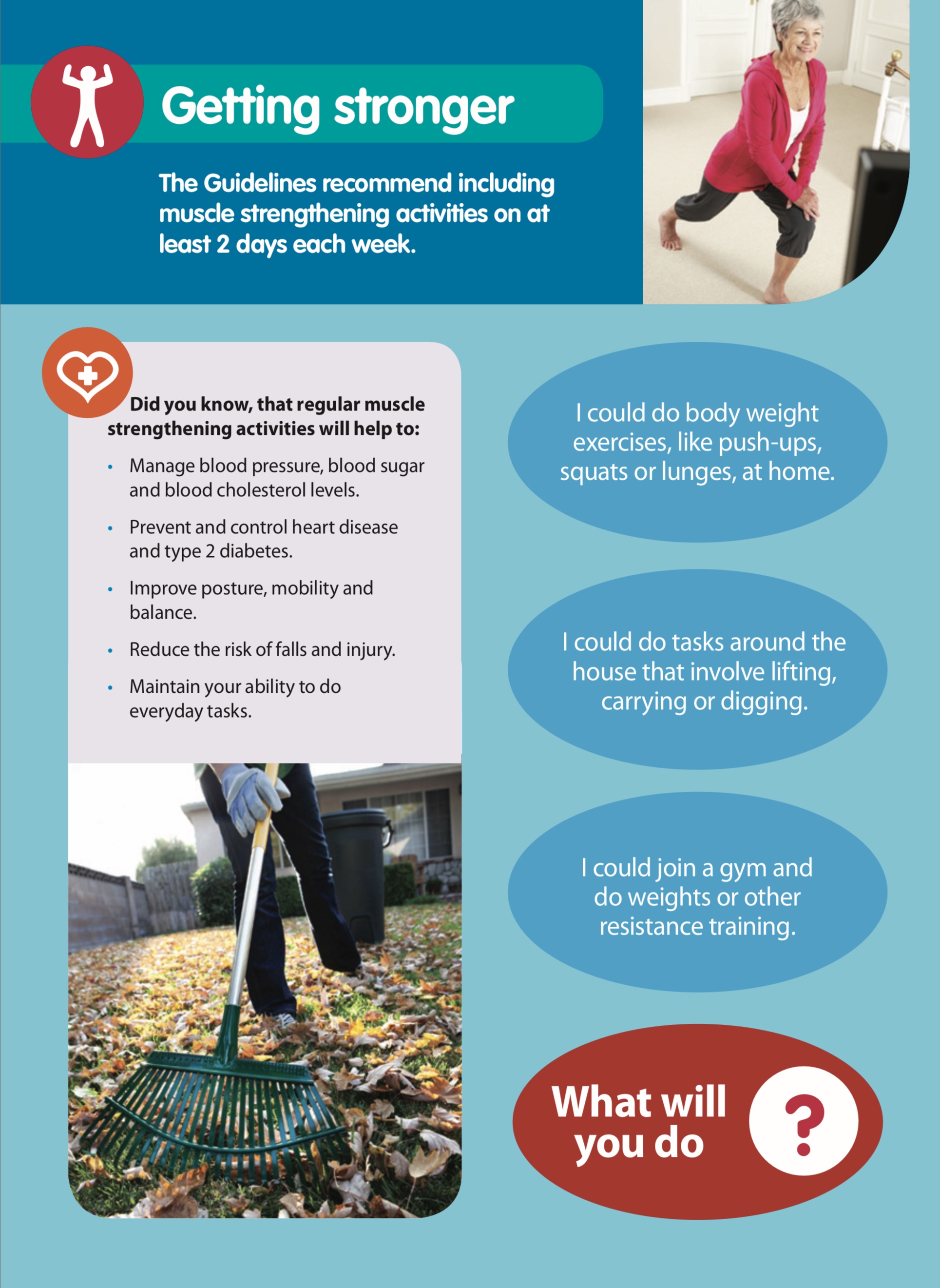
The development and publication of the “Australian Evidence-Based Physical Activity Recommendations for Adults (18-64 years)” by the Australian Government, The Department of Health (August 2012) promote the participation in “muscle strengthening activities” to:
• Manage blood pressure, blood sugar and blood cholesterol levels.
• Prevent and control heart disease and type 2 diabetes.
• Improve posture, mobility and balance.
• Reduce the risk of falls and injury.
• Maintain your ability to do everyday tasks.
Evidence? Who needs evidence………
However, let me inform you that there are components of these guidelines that have virtually no supporting scientific evidence. The advice that “I could do tasks around the house that involve lifting, carrying or digging” whilst facilitating energy expenditure and contributing to an active lifestyle are not well defined and are somewhat nebulous. For example, lifting a chair up, carrying a full bag of rubbish to the outside bin or doing some gardening will do very little to nothing to improve your muscle strength or power. Many of these are normal everyday activities that pose no significant challenge to our musculoskeletal system and hence will be unlikely to bring about full realisation of the benefits mentioned above. Perhaps you could contend that heavy digging that produces fatigue and requires constant breaks could be classified as “strength-like” training, but how many people (unless doing as a job) are out in the backyard doing regular heavy digging every week.
Is this enough?
If you really want to improve your muscle strength and power, which has been shown to have so many benefits for older adults, and that I have outlined elsewhere (see here), you need to perform challenging resistive-type physical activities or exercise that involve “high effort”. You can utilise a number of different things to do this (e.g. traditional apparatus like barbells/dumbbells, kettlebells, machine weights or plain old bodyweight-based exercises or resistance bands or anything around the house that is challenging to to lift and move around…in fact pretty much anything if you know how) – but most importantly when you use any of these things the muscle work needs to be hard to very hard for you and/or high to very high in effort. If you meet such requisites you can be confident that what you are doing is resistance or strength training and will consequently help achieve the benefits mentioned previously.
Disclaimer: All contents of the FitGreyStrong website/blog are provided for information and education purposes only. Those interested in making changes to their exercise, lifestyle, dietary, supplement or medication regimens should consult a relevantly qualified and competent health care professional. Those who decide to apply or implement any of the information, advice, and/or recommendations on this website do so knowingly and at their own risk. The owner and any contributors to this site accept no responsibility or liability whatsoever for any harm caused, real or imagined, from the use or distribution of information found at FitGreyStrong. Please leave this site immediately if you, the reader, find any of these conditions not acceptable.
Founder of FitGreyStrong,
Exercise Physiologist & Scientist,
40+ years experience,
Strength & Conditioning,
Helping people over 50 live fitter, stronger, happier lives,
Author of the Older Adults chapter in “Advanced Personal Training - Science to Practice” edition 2,
All social media: @FitGreyStrong
In part 1 of “The Ebbeling vs. Hall trials: Re-visiting How Diet Affect Energy Expenditure & Weight Loss” I argued that the conclusions made by authors of the Ebbeling trial – where it was purported that a very low carbohydrate diet significantly mitigated the reduction in energy expenditure subsequent to weight loss compared to diets higher…
What is creatine? To read the updated 2026 version click here. The use of creatine (Cr) can be traced back to the early 1990s when several elite sprint athletes reported performance-enhancing benefits following gold medal winning performances at the 1992 Barcelona Olympic Games (Anderson, 1993). This sparked the birth of a new era with creatine…
The following article is a long review and appraisal of a study that investigated the effects that sitting had – with and without caloric restriction – on metabolic health and compared this to a group that was physically active. This was designed in an attempt to independently tease out just what effect – firstly, the…
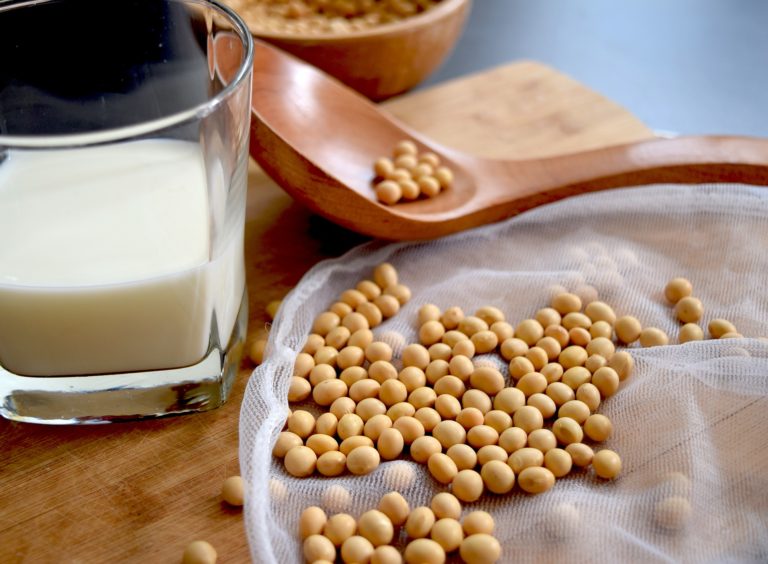
Where Good Research Leads To Poor Interpretation In my last research article review titled “Muscle strength gains during resistance exercise training are attenuated with soy compared with dairy or usual protein intake in older adults – part 1” (see here), no additional benefit for improvements in strength, body composition, physical function, or quality of life when additional…
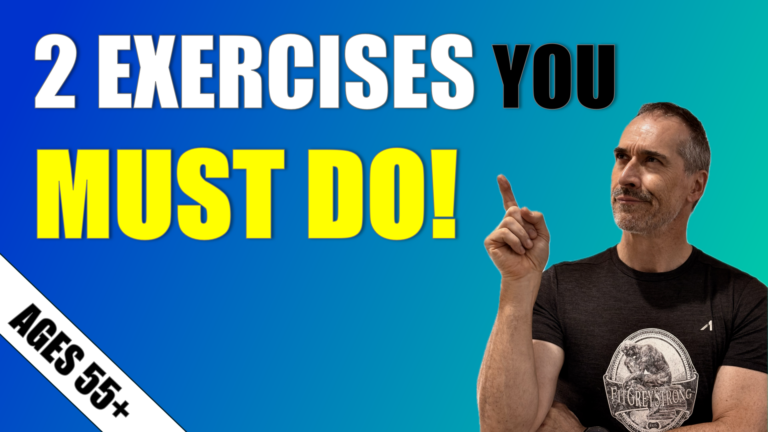
This video is a must-watch for anyone over 55. In 13 minutes, FitGreyStrong explores 2 muscle groups – the Hip Flexors and the Dorsiflexors – and the must do exercises that are often overlooked or simply just ignored, but which are crucial to maintain stability and high physical functioning in older adults. Crucially, the presentation…
No, you will not “bulk up” if you lift weights 😉 Disclaimer: All contents of the FitGreyStrong website/blog are provided for information and education purposes only. Those interested in making changes to their exercise, lifestyle, dietary, supplement or medication regimens should consult a relevantly qualified and competent health care professional. Those who decide to apply…
Share this:
One Comment
It’s an amazing article in favor of all the web users; they will obtain advantage from it I
am sure.



It’s an amazing article in favor of all the web users; they will obtain advantage from it I
am sure.